After more than 20 years of working with various educational robotics solutions, I reached a point where I knew it was time to move forward.
I did not switch platforms impulsively.
This decision was deliberate, structured, and based on clearly defined professional criteria.
My primary focus today is working with 3rd–5th grade students, and I needed a solution that would meet both engineering and pedagogical expectations at a high level.
After carefully analyzing multiple platforms, I chose products developed by VEX Robotics.
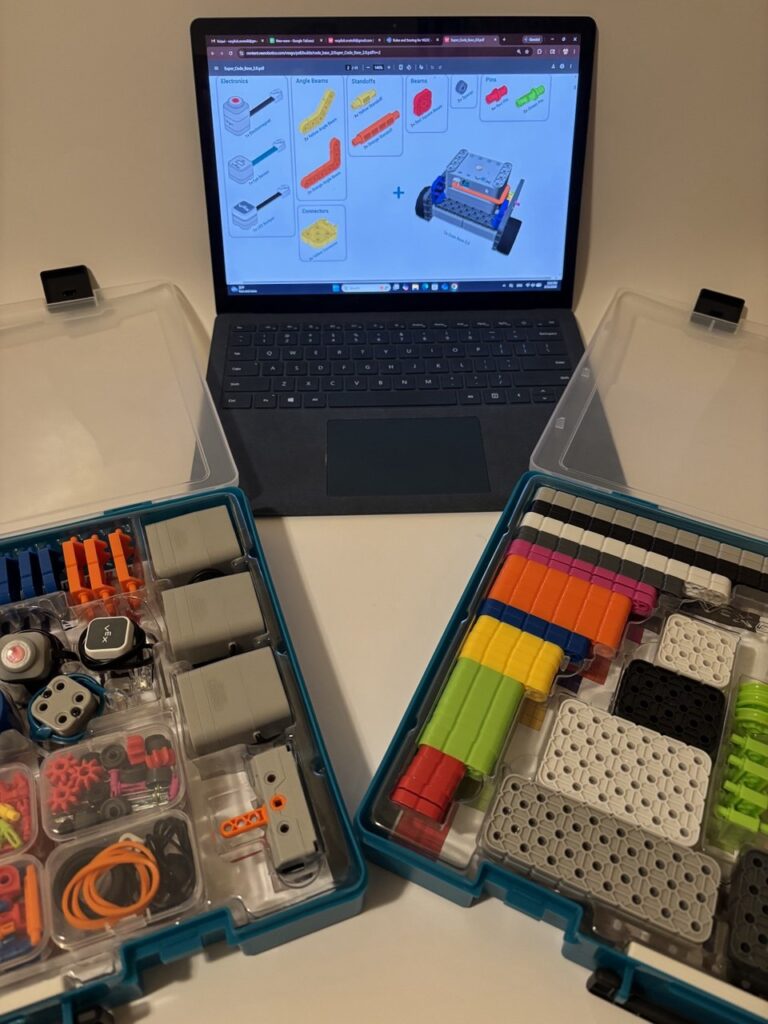
VEX GO — Practical Experience and Professional Evaluation
I currently own the kit and actively work with it.
I build models, write and test programs, and design my own constructions — including recreating them in 3D environments.
This choice was not theoretical. It is based on hands-on experience.
The Requirements I Set Before Choosing
Before selecting a new platform, I defined strict criteria:
- It had to be a true construction-based robotics system, not a preassembled programmable robot.
- A wide range of mechanical elements (gears, belts, beams, structural components).
- Multiple motors and sensors.
- A well-designed central Brain.
- Scratch-based programming with logical structure.
- The ability to create and model custom builds.
- Strong teacher training and certification.
- A competition ecosystem extending beyond local events.
After evaluating many options, VEX GO met all these requirements.
Mechanical Quality and Engineering Depth
The construction elements immediately stood out:
- Metal axles
- A broad selection of gears
- Belt drive components
- Structural beams and connectors
- Three motors (which is significant for this age group)
The materials feel solid and thoughtfully engineered.
The storage system is also exceptionally well organized — every component has a clearly defined place. For 3rd–5th grade students, this matters more than people often realize. Organization supports engineering thinking.
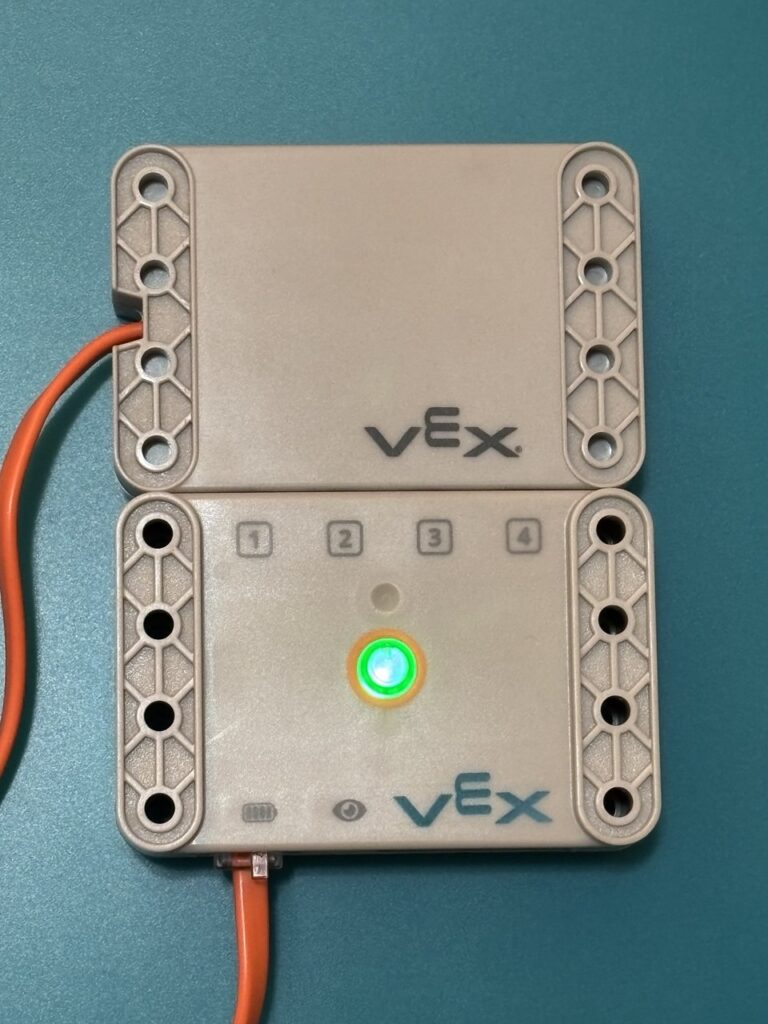
Brain and Electronic Components
The Brain includes:
- 6 ports
- A dedicated Eye Sensor port
- A separate battery port
- 4 smart ports for motors and sensors
There is no display — and for 3rd–5th grade learners, that is not a limitation.
Sensors include:
- Eye Sensor (color/object detection)
- Touch sensor with LED feedback
- Electromagnet
For students in grades 3–5, this range allows meaningful problem-solving, mechanical experimentation, and structured programming challenges.
Programming Environment
The programming environment is Scratch-based and intuitive.
While some block names differ slightly from other platforms, the logic remains clear. Students can work in:
- Autonomous programming mode
- Remote-control mode
- Incremental algorithm development
The system supports growth without overwhelming beginners.
Certification and Professional Training — A Critical Factor
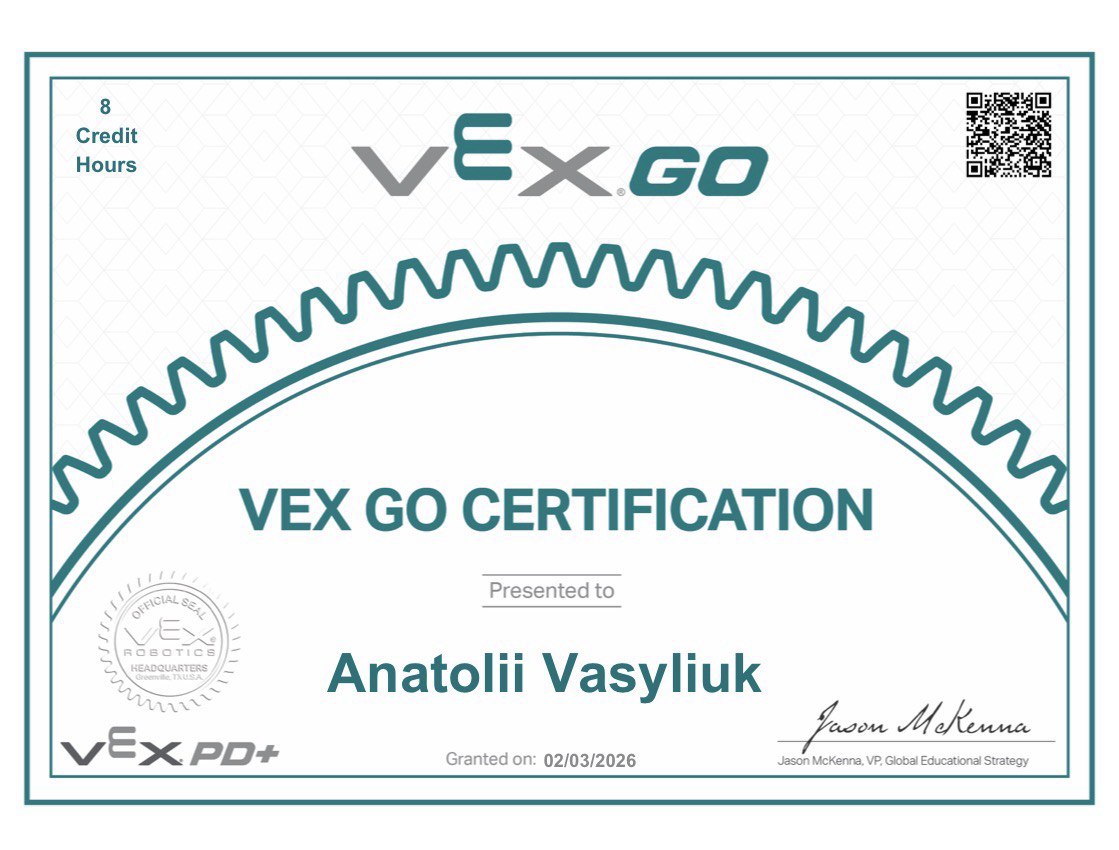
One of the most important parts of my decision was completing certification through the official VEX Robotics portal.
The certification process is:
- Completely free
- Structured in modules
- Includes testing after each section
- Concludes with a final exam
- Provides official certification upon completion
However, the real value is not just the certificate.
The training is deep and methodically designed:
- Structured written materials
- Embedded links to extended resources
- Dedicated sections on kit organization
- Detailed explanations of electronic components
- Clear foundations of programming logic
- Additional technical references
- High-quality instructional videos
After completing the certification and reviewing the training videos, everything became clear:
- How to organize lessons
- How to structure mechanical explanations
- How to scaffold programming concepts
- How to integrate engineering challenges into classroom practice
This was not superficial onboarding.
It was genuine professional preparation.
The fact that such depth is available — even without a paid subscription — speaks volumes about how thoughtfully the ecosystem was built.
After reviewing many educational systems over the years, I can confidently say that this is one of the most comprehensive teacher-support environments I have encountered.
Methodological Resources
Even the free portal includes:
- Ready-to-use lesson structures
- Engineering explanations
- Concept breakdowns
- Step-by-step project guidance
There is also an extended subscription option, but even without it, the available resources are substantial.
Competition Ecosystem
Another decisive factor was the competition structure.
VEX Robotics Competition offers an international pathway from local events to global stages.
VEX GO also provides a dedicated competition kit with thematic missions (including space-themed challenges). My next step is to integrate this into my classroom work, because competition creates:
- Purpose
- Motivation
- Accountability
- Team-based engineering thinking
Students should understand why they are building and programming — not just how.
Conclusion
For 3rd–5th grade students, this is currently one of the most effective robotics solutions I have worked with.
- Strong mechanical foundation
- Thoughtfully designed electronics
- Intuitive programming
- Extensive teacher support
- Free professional certification
- A clear competition pathway
This decision was not accidental.
It was the result of defined criteria, professional training, practical testing, and direct experience with the kit.
After reviewing numerous platforms over the years, I consciously chose this one.
And for my current teaching context, it marks the beginning of a new professional stage.
If you’d like to learn more about Educational Robotics, feel free to reach out to me.
For training, consultation, or collaboration:
vasyliuk.anatolii@gmail.com
Author: Anatolii Vasyliuk
Copying or use of this material without the author’s written consent is strictly prohibited.