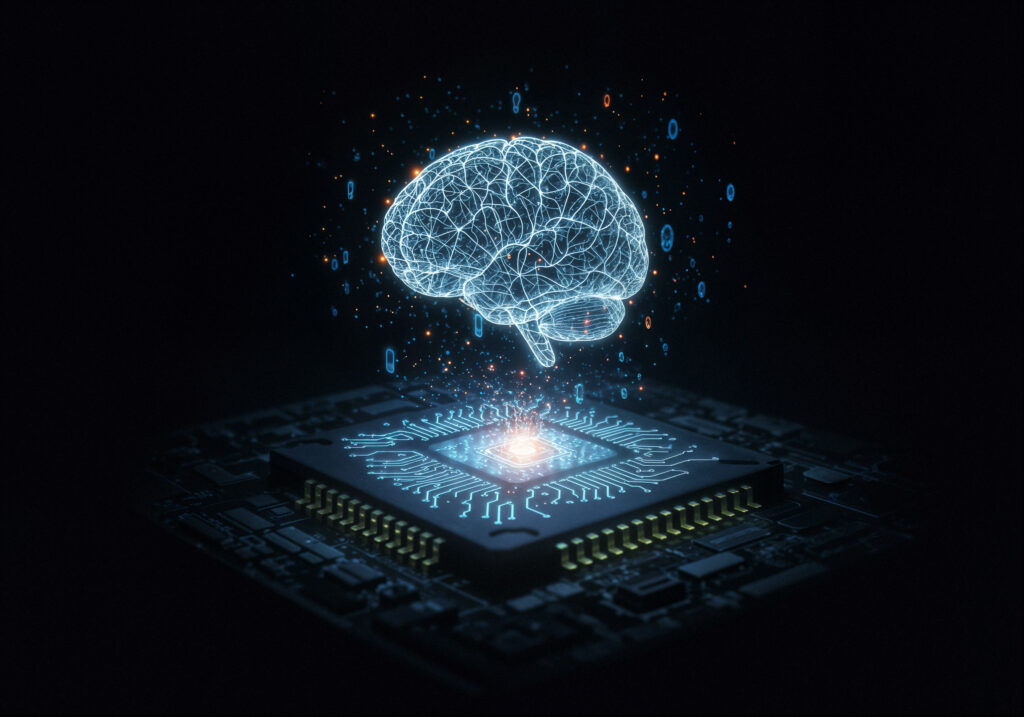
Artificial Intelligence is one of the most powerful forces of the 21st century. We’ve already gotten used to neural networks generating text, images, music, presentations, and even computer code. But it’s crucial to understand that this is just one branch of AI development. Another, equally important and fascinating, is engineering AI — the kind that doesn’t just exist in the digital world but interacts with the real world through sensors, motors, and robot bodies.
At the intersection of robotics and artificial intelligence, a new dimension of technology is emerging — intelligent robotics, or “robots that think.” And this isn’t just a catchy phrase — it’s the future of applied engineering.
A Personal Journey: My First Encounter with AI in Robotics
I first saw this in action back in 2015 at the World Robot Olympiad (WRO) in Doha, Qatar. In the university category, teams competed with large engineering robots built on Matrix and Tetrix platforms, equipped with basic black-and-white cameras. What amazed me was that this was real computer vision and machine learning in action: the robots recognized objects, analyzed trajectories — and played bowling!
It was a breakthrough moment for me: robots could see, analyze, make decisions — not in theory or in a simulator, but in real time, on a real competition field.
Beyond Neural Networks: AI as Applied Engineering
AI isn’t just about generating content. It’s essential to understand that:
- Generative AI (like ChatGPT, DALL·E, Copilot, etc.) is just one part of the equation.
- Applied, hardware-based AI is about integrating intelligence into real-world devices: robots, drones, autonomous vehicles, smart manipulators.
In robotics, AI is used for computer vision, decision-making, adaptive learning, navigation, object recognition, and human-machine interaction. This is the foundation of the next technological revolution.
Teaching AI to Kids: Where to Begin?
Fortunately, there are already excellent tools that help introduce children to the fundamentals of AI through hands-on learning.
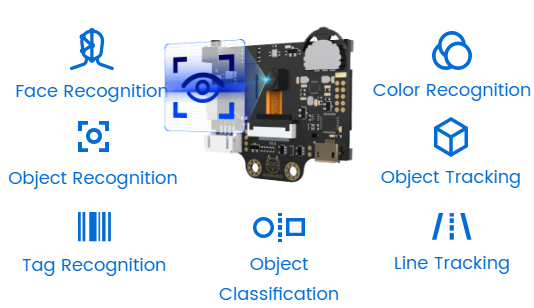
My top choice is DFRobot HuskyLens — a computer vision module that supports real-time learning. Kids can explore facial recognition, gesture detection, object tracking, color and shape identification, QR code reading — without needing to code extensively.
Special attention should be given to HuskyLens by DFRobot — a highly capable and user-friendly module that makes artificial intelligence accessible in the world of educational robotics. HuskyLens allows children to explore machine learning and computer vision in a hands-on, engaging way — with minimal coding required.
This autonomous device supports a powerful set of features:
- Face Recognition
- Object Tracking
- Object Recognition
- Line Tracking
- Color Recognition
- Tag Recognition
- Object Classification
HuskyLens is a true breakthrough for educational programs because it enables kids to see AI in action in the real world — recognizing objects, following them, and reacting to the environment. It shows that AI isn’t just about digital neural networks or text/image generation; it’s also about practical engineering solutions that teach children how artificial intelligence operates in physical, tangible ways.
Other great options include:
- Yahboom AI Robots — platforms with built-in cameras and AI modules for visual data processing.
- RoboRobo AI Makers Kit — a promising solution I’m eager to explore and test further.
Why It Matters
AI is transforming our world. But as educators, our goal is not just to explain what AI is — it’s to empower children:
- To understand how AI works.
- To interact with it meaningfully.
- To believe that they can build real, intelligent machines.
Robotics with AI and computer vision helps develop critical thinking, creativity, technical imagination, and teamwork. Most importantly, it helps children gain confidence in themselves.
Because those who learn how to control intelligent machines today will be the ones shaping the future tomorrow.
If you need more information about Educational Robotics – feel free to contact me.
If you require assistance, training, or consultations – write to me at vasiljuktolik@gmail.com.
Author: Anatolii Vasyliuk
Copying and using these materials without the author’s personal permission is prohibited!